
Water stain near the fireplace. Peeling paint on the chimney wall. A faint musty smell that won’t go away, no matter how much you clean. These aren’t random house quirks. They’re the chimney telling you something is wrong, and it’s usually been wrong for longer than you’d think.
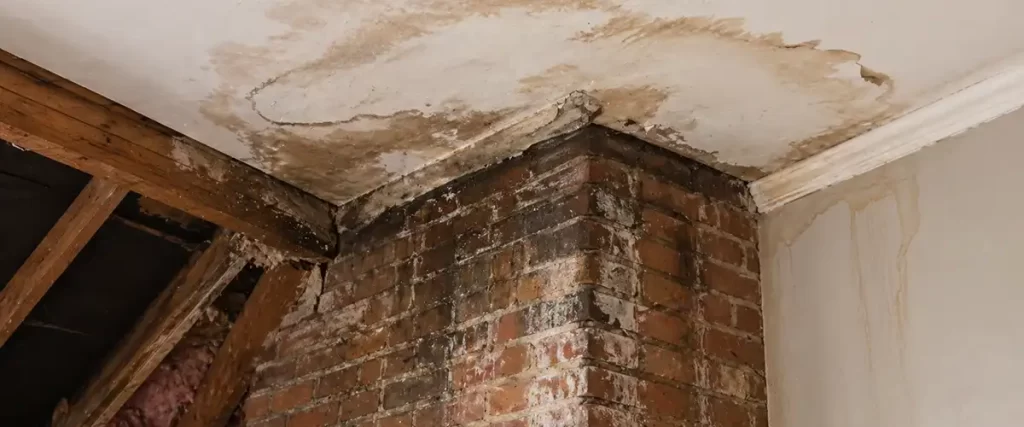
The tricky part about a leaking chimney is that water rarely appears right where it entered. It travels along rafters, soaks into insulation, and shows up on your ceiling several feet from the actual problem. Chasing the stain gets you nowhere. You have to go higher.
Most roof leaks around chimneys come from failed flashing, cracked chimney crowns, deteriorated mortar joints, or missing cricket flashing behind a wide chimney. The fix depends on where the water is entering, so the first step is figuring out whether the problem is the roof flashing, the masonry, or both.
Why Chimneys Leak More Than Anywhere Else on the Roof
A chimney punches straight through your roofing system. Every inch of that junction is a seam between masonry and roofing material, two things that expand, contract, and age at completely different rates. Keeping water out of that seam is entirely the job of the flashing system, and a lot of times, roof leaks originate at flashing points rather than through the shingles themselves.
What Might Be Causing the Leak Around Your Chimney
1. Failed or Damaged Flashing
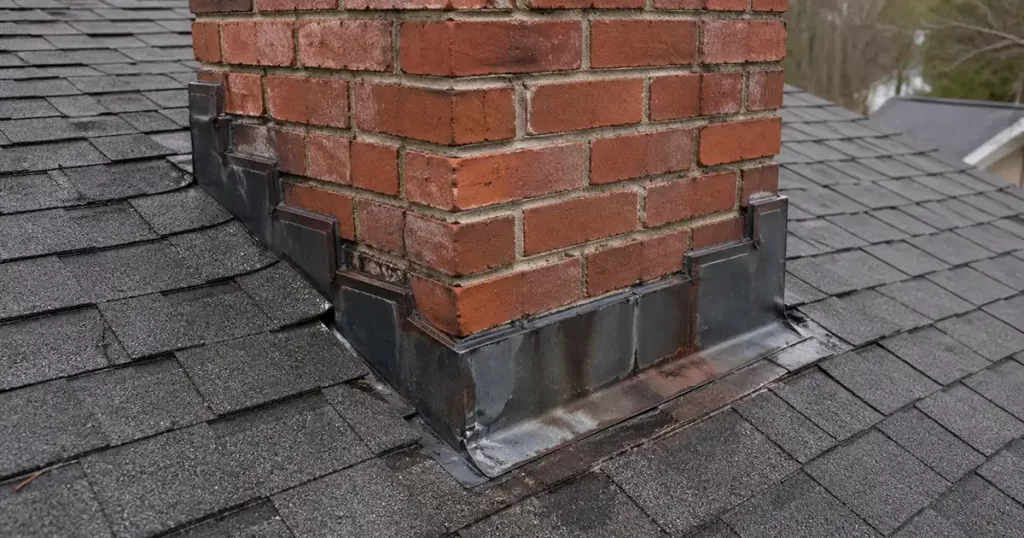
Chimney flashing is a layered system, not a single piece of metal. Base flashing runs up from the roof deck at the chimney’s bottom edge. Step flashing runs up the sides, one L-shaped piece interwoven with each shingle course. Counter flashing gets embedded into the mortar joints of the brick and folds down over the step flashing to seal the whole upper edge.
Every layer depends on the next. When counter flashing pulls out of its mortar channel, or step flashing was installed without proper overlap, or old galvanized steel has rusted through at the bends, water finds the gap immediately. And it doesn’t wait.
There’s a pattern that shows up constantly: a homeowner gets new shingles installed, the roofer leaves the original flashing in place to save time, and a few years later water starts coming in.
The roof looks new. The flashing underneath is twenty years old. If you’re getting a full roof replacement, the flashing around the chimney should come off too. Our roof replacement page covers what a thorough job actually includes.
What to look for from the ground: rust streaks on the brick near the flashing line, visible gaps between metal and masonry, sections of flashing lifting at the edges, or heavy caulk buildup that signals repeated patch attempts.
2. A Cracked Chimney Crown
The chimney crown is the concrete cap at the very top of the stack. It slopes outward to drain water away, with a gap in the center for the liner. Small cracks in the crown seem harmless until winter arrives.
Water gets into a hairline crack. It freezes, expands, and forces the crack wider. That cycle repeats every cold season. By spring, that hairline has become a gap wide enough to let rain run directly into the masonry, traveling down through the chimney wall and appearing as moisture inside the house, sometimes nowhere near the fireplace.
Minor crown damage can be sealed with a flexible crown coat product. Sections that have crumbled or broken away need a full rebuild.
3. Crumbling Mortar Joints
Mortar is softer than brick by design. It takes the weathering so the brick doesn’t have to. After a few decades, those joints can be recessed enough to collect water rather than shed it, and in climates with serious winters, freeze-thaw cycles chip away at them every single year.
The repair is tuckpointing: grinding out the degraded material and packing in fresh mortar. If the brick has also gone porous from long exposure, following up with a waterproof masonry sealant on the exterior adds a second line of defense. Both together address the problem properly.
4. No Cricket Behind a Wide Chimney
Chimneys wider than roughly 30 inches on the upslope side need a diverter built behind them, called a cricket. Without one, water and debris collect in the valley between the chimney’s back face and the rising roof slope. That pooling overwhelms even correctly installed step flashing over time. If all the visible flashing looks intact and water is still getting in, this is what to check next.
Should You Call a Roofer or a Mason?
If the leak is coming from the flashing where the chimney meets the roof, call a roofer. If the chimney crown, brick, or mortar joints are cracked or crumbling, a mason may need to handle that part.
A lot of chimney leaks involve both, so the best repair starts with figuring out whether the water is getting in through the roofing system, the masonry, or the transition between them.
Before You Get a Quote, Confirm the Leak Source
A chimney leak quote should start with diagnosis, not just a bead of caulk around the flashing. Before giving you a repair price, a roofer should check the step flashing, counter flashing, roof decking around the chimney, attic staining, wet insulation, and whether water is being pushed behind the chimney because there is no cricket.
The cause matters because the price can change quickly. A small flashing reseal is a different repair from removing and replacing failed flashing, adding a cricket, replacing soft decking, or coordinating masonry work for a cracked crown or deteriorated mortar.
That is how Braga Brothers Roofing approaches chimney leak repairs: we inspect the roof-to-chimney transition first, explain where the water appears to be entering, and quote the repair based on the actual cause instead of guessing from the ceiling stain.
Need a quote for a chimney leak? Braga Brothers Roofing can inspect the flashing, attic area, roof deck, and visible masonry, then give you a clear roof repair quote before the next heavy rain. If water is actively coming in, call (732) 888-3892 or start with our emergency roof repair service.
Signs Worth Taking Seriously Right Now
Some of these show up on the exterior, some inside the house. Either way, they’re worth acting on before the next heavy rain:
- Rust streaks running down the brick near where flashing meets the chimney
- Peeling paint on the interior chimney wall, especially higher up near the ceiling
- Water stains on ceilings that appear or worsen after rain
- Wet insulation in the attic directly around the chimney base
- Musty smells near the fireplace even when it hasn’t been used recently
- Visible gaps in mortar joints when viewed from ground level
When to Repair and When to Replace the Flashing
A reseal works when the metal is structurally intact and the issue is dried-out sealant or minor separation. When flashing is corroded, was installed without proper overlap, or is original flashing left behind during a shingle replacement, it needs to come off entirely. Patching over failing metal just redirects the water to the next gap.
One thing worth noting: if a gas furnace vents through the same chimney, condensation from combustion gases can deteriorate the chimney liner from the inside. A compromised liner lets moisture migrate into the surrounding masonry and accelerates the whole system’s deterioration. Liner condition is part of any thorough chimney leak diagnosis, not an afterthought.
For an active leak, our roof repair page walks through what a proper chimney inspection and repair looks like from start to finish.
FAQ
The leak only happens during heavy rain. Does that change the diagnosis? Not really. Most chimney flashing leaks only show themselves under volume. A gap that handles light rain can be overwhelmed when water is driving in hard or running in sheets off the slope above. It still needs fixing.
How long does chimney flashing typically last? Copper flashing can last 50 or more years. Galvanized steel runs 15 to 30 depending on climate and how well it’s maintained. Caulk-only repairs have a much shorter effective life and need checking every year or two.
Can I seal the flashing myself? Minor resealing with a polyurethane or silicone roofing sealant is manageable on an accessible, low-slope section. Anything involving reflashing, crown rebuilding, or mortar work really does benefit from proper installation technique. Poor chimney flashing work is one of the leading causes of leaks that homeowners have already attempted to “fix” once.
Get a Chimney Leak Repair Quote Before the Next Storm
Chimney leaks don’t wait patiently. Once water has a path in, it uses it every time it rains, and the damage compounds quietly until it becomes harder to ignore. If you are seeing signs of a roof leak around your chimney, call Braga Brothers Roofing at (732) 888-3892 or request a roof repair quote online. We can inspect the leak source and quote the repair before the next storm gives you another ceiling stain to explain.