
Water dripping into a bucket in the middle of your living room is nobody’s idea of a good time. And if you’ve found this page, there’s a decent chance you’ve already got a stain on the ceiling, a suspicious smell upstairs, or a very unhappy spouse pointing at a wet patch on the drywall.
Either way, let’s figure out what’s going on and what you can actually do about it.
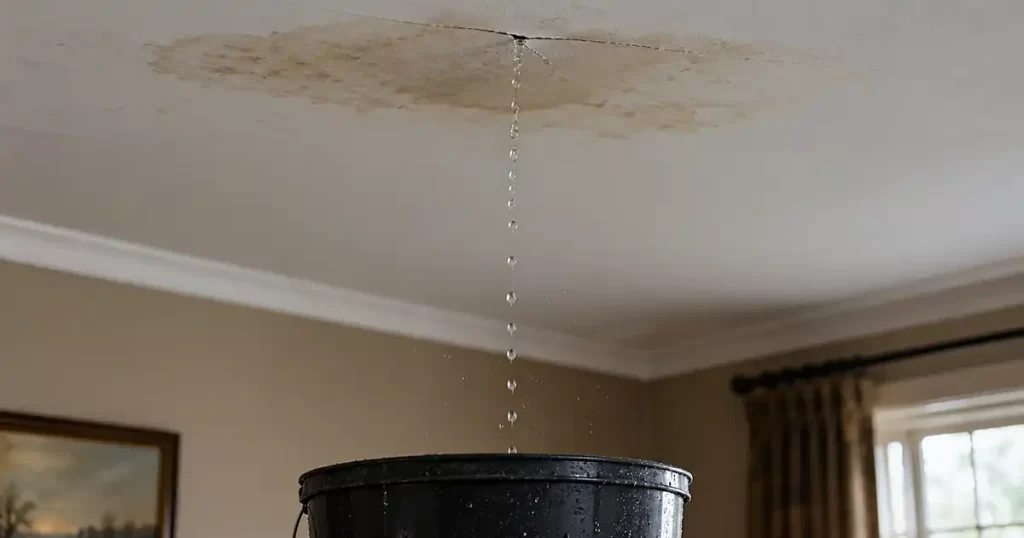
What to Do First When Your Roof Is Leaking
If water is coming into the house right now, focus on limiting damage before trying to repair the roof.
Move furniture and valuables away from the leak, place a bucket under active dripping, and use towels or plastic sheeting to protect the floor. If water is near light fixtures, outlets, or electrical wiring, turn off power to that area and call a professional right away.
Once the inside is protected, look for the leak source from the attic if it is safe to access. Check for wet insulation, dark stains on the roof decking, or water trails running down rafters. The visible ceiling stain is often not directly below the actual roof opening.
If the roof is steep, wet, icy, storm-damaged, or hard to access, do not climb on it. A temporary tarp or exterior repair is only worth attempting if you can do it safely.
How to Find the Real Leak
Here’s where most people go wrong. They see water dripping from the ceiling, climb up to that exact spot on the roof, find nothing obviously wrong, patch something random, and call it a day. Then it rains again.
Water is sneaky. It enters at one point and travels along rafters, underlayment, or insulation before it drips anywhere you can see. The ceiling stain is just where it gave up. The actual entry point is usually somewhere uphill from there.
Start in the attic with a flashlight after a heavy rain. Look for wet insulation, dark wood staining on rafters, or light coming through where there shouldn’t be any. Trace the moisture back toward the roof surface. That’s where you’ll find the real problem.
If you can’t catch it during rain, a garden hose and a patient helper work well. Have someone inside watching the attic while you slowly soak sections of the roof starting from the bottom and working up. When the drip appears inside, you’ve found your zone.
Common Causes of Roof Leaks
Once you’re looking in the right place, roof leaks tend to come from a pretty predictable shortlist.
Damaged or missing shingles are the most obvious. High winds lift them, age cracks them, and fallen debris punches through them. When a shingle is gone or broken, there’s nothing between the rain and your roof deck.
Flashing failures around chimneys, roof vents, and plumbing vents are the sneakier culprits. Metal flashing is only as good as the seal holding it to the surrounding surface. When that seal dries out, cracks, or pulls away from the masonry, water walks right in. According to Angi, professional leak repairs run between $360 and $1,550 depending on the type of damage, and flashing issues sit at the more involved end of that range.
Clogged gutters are worth mentioning because homeowners rarely connect them to roof leaks. When gutters back up, water pools along the roof edge and works its way under the shingles rather than draining away. A simple cleaning prevents a genuinely annoying problem.
Cracked roof vents and pipe boots are easy to miss. The rubber collar around plumbing vents degrades with UV exposure and temperature swings, often long before the rest of the roof shows any issues. A cracked boot on a plumbing vent can let water in for years before anyone notices.
On flat roofs, the culprits shift slightly. Broken seams, bubbled membrane, and pooling water from poor drainage are the main issues. Patching a flat roof involves cleaning the area thoroughly, cutting a patch from matching material, and heat-welding or cementing it down with proper overlap on all sides.
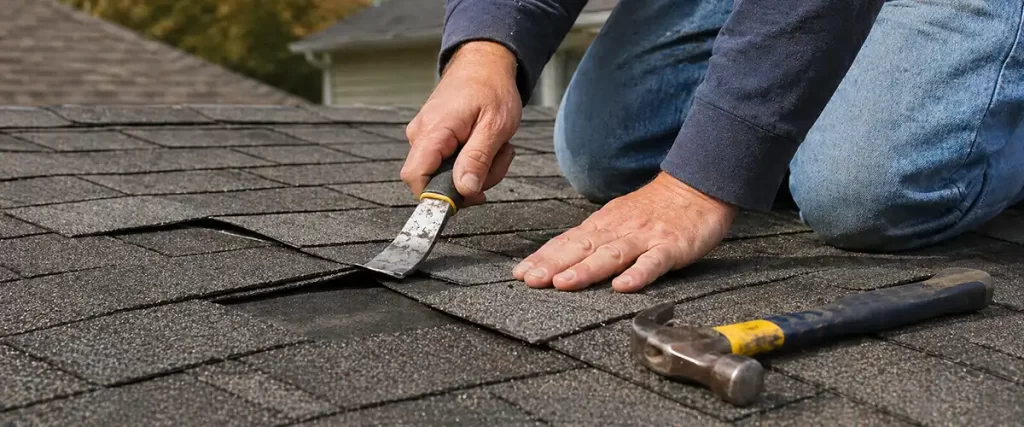
What You Can Actually Fix Yourself
Be honest with yourself here. A few things are genuinely manageable as DIY repairs on a single-story home with a reasonable pitch.
- Replacing a handful of missing shingles on an accessible section: slide out the damaged shingle, remove the old roofing nails, slide in the replacement, nail it down about an inch below the upper shingle’s edge, and seal with roofing cement
- Resealing lifted flashing where the metal is still sound but the sealant has dried and cracked: clean the surface, apply a polyurethane or silicone-based roof sealant, press the metal back into contact
- Patching a cracked pipe boot around a plumbing vent: boot replacement kits are available at any hardware store and involve removing a few shingles, swapping the boot, and replacing the shingles over it
- Emergency tarping before a contractor can get there: a tarp extending at least four feet beyond the damaged area on all sides, weighted or nailed along the edges, buys you time without causing further damage
One honest warning about roofing cement and tar: they work as short-term fixes, not permanent solutions. Piling tar over a failing flashing installation or a rotted section of roof deck does not fix the underlying problem. It also makes a contractor’s job messier and sometimes more expensive when they have to strip it all off to do the real repair.
The Consumer Financial Protection Bureau recommends always getting written documentation before any contractor begins work, which is worth keeping in mind when the leak is serious enough to call someone in.
When to Stop and Call a Roofer
Steep roofs. Multi-story homes. Anything involving structural damage to the roof deck. Widespread damage covering more than a small section. Any situation where you looked at the ladder, looked at the roof pitch, and felt a mild sense of dread. Those all belong to a professional.
The same applies when you’ve patched something twice and the leak keeps showing up. That usually means the real source is somewhere you haven’t found yet, and a roofing contractor with experience can diagnose it in one visit rather than letting you discover it through trial and error over three more rainstorms.
FAQ
Can I fix a roof leak from inside the attic? Temporary measures, yes. Roofing tape applied to the underside of the deck can slow things down while you wait for a repair. A permanent fix always happens on the exterior.
How long can I leave a roof leak before it becomes serious? Not long. A few weeks of ignored moisture can lead to mold in the insulation, wood rot in the rafters, and ceiling damage that turns a $500 repair into something considerably worse.
Will my homeowners insurance cover a roof leak? Storm damage usually yes. Gradual deterioration from deferred maintenance usually no. Document everything and contact your insurer before any repairs begin.
Let Someone Else Climb Up There
If tracing moisture through an attic with a flashlight on a Saturday morning doesn’t sound like your version of a good time, that’s completely reasonable.
Our roof repair service handles everything from isolated flashing fixes to full leak investigations, and if the damage turns out to be more extensive, our roof replacement page covers what that process looks like. Call us at (732) 888-3892 or message us here and we’ll figure out what’s actually going on up there.