
There are a handful of spots on a roof that fail quietly and consistently, and the vent pipe area is at the top of that list. No dramatic damage, no missing shingles, no obvious sign anything is wrong until there’s a water stain on the bathroom ceiling directly below a pipe that’s been silently leaking through for months.
Here’s the thing about vent pipe leaks: the component responsible is almost always the same, it’s small, it’s cheap, and it almost never gets replaced when the rest of the roof does.
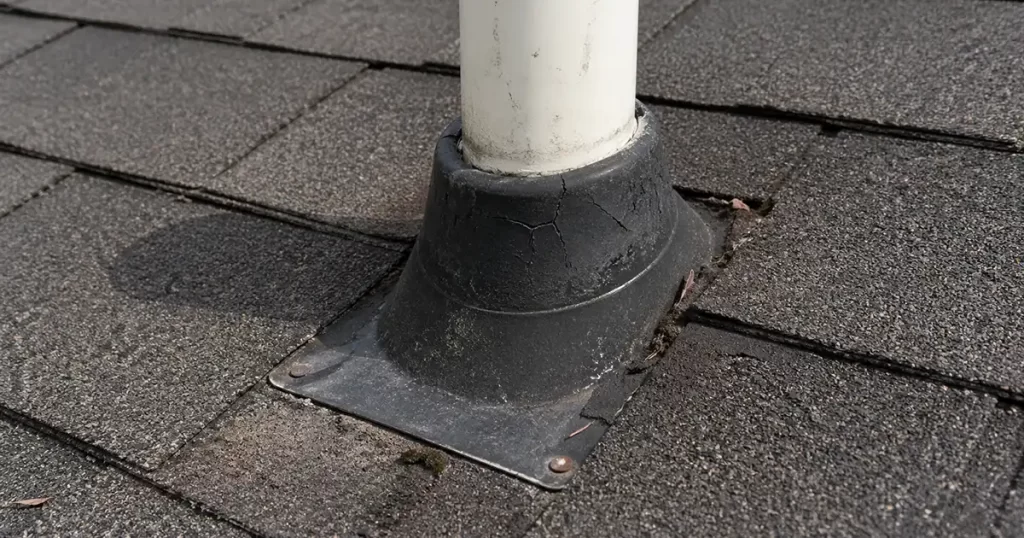
Meet the Pipe Boot
Every plumbing vent pipe that exits your roof needs a seal between the pipe and the surrounding roofing material. That seal is called a pipe boot, and it does a straightforward job. A rubber or metal collar wraps around the pipe, a flat base flange tucks under the shingles on the upslope side and over the shingles below, and together they direct water away from the penetration rather than into it.
When a pipe boot is working correctly, you’d never think about it. When it fails, you think about very little else.
Standard rubber boots last between 10 and 15 years before UV exposure, temperature cycling, and weather stress break down the material. Most roofs have asphalt shingles rated for 25 to 30 years.
That math means a homeowner on a 20-year-old roof might have replaced shingles once and never touched the boots, even though those boots have been due for replacement for half a decade.
Why They Fail
Rubber doesn’t love sunlight. It doesn’t love winter either. Each summer, the material expands in the heat. Each winter it contracts in the cold. After enough cycles, it loses flexibility and starts cracking, first small surface cracks, then deeper splits that let water pass through freely.
Beyond age, a few other things accelerate failure:
Improper installation from the start. A boot installed without the top portion of the base flange tucked under the shingles above leaves exposed edges where water can get behind it. Exposed nail heads on the flange that weren’t covered by the next shingle course create direct entry points.
The wrong size for the pipe. Pipe boots come in specific sizes to match standard pipe diameters. A boot that’s even slightly too large for the pipe it’s sealing creates a gap at the collar that no amount of sealant reliably fixes long-term.
Debris piling up around the boot. Leaves and granules from aging shingles collect at the base of the boot, trap moisture against the rubber, and accelerate deterioration from below. The boot looks fine from a distance. Up close, the base has been sitting in a wet leaf pile through multiple winters.
Damage from impact. A branch coming down in a storm doesn’t have to be large to crack a rubber collar. Even hail can puncture an already-aging boot.
How to Tell if This Is Your Problem
You don’t need to climb on the roof to get a reasonable read on whether a vent pipe is the source of a leak. Start from inside the house.
Water stains on a ceiling directly below a bathroom or kitchen, smells of moist air in the attic near a vent pipe location, wet insulation in that same zone after rain. Any of those point toward the vent area. From the ground, binoculars or a zoomed-in phone camera show you whether the rubber collar around any visible vent pipe looks cracked, shrunken, or pulling away from the pipe. A boot in good shape sits flush against the pipe with no visible gaps. One that’s failing shows crazing on the surface, separation at the collar, or obvious cracks.
Inside the attic, look for:
- Dark staining on the roof deck directly around a vent pipe penetration
- Wet or compressed insulation below the same area
- Light visible around the pipe where it exits through the deck, which means the seal has separated completely
- Mold growth on nearby wood, which signals the leak has been going on longer than anyone realized
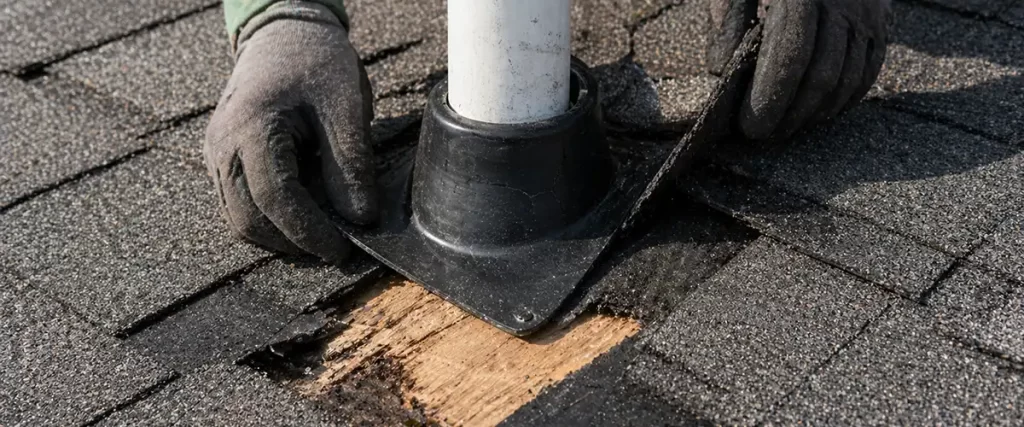
The Fix, Depending on What You’re Dealing With
Surface Cracks in the Rubber, Boot Otherwise Intact
If the rubber collar shows early surface cracking but hasn’t separated from the pipe and the base flange is still seated properly, a compression sleeve over the existing boot plus a bead of quality polyurethane roofing sealant at the collar can extend the seal’s life by several years. This is a legitimate repair, not just a patch, provided the underlying structure is sound.
Boot Has Failed, Flange Is Still Intact
A full boot replacement. The damaged boot comes off, the flange area gets inspected for any damage to the underlying shingles and deck, and a new correctly-sized boot goes in. The base flange tucks under the upslope shingles, lays over the downslope shingles, gets nailed at the corners, and every nail head gets covered by sealant. The surrounding shingles are reseated.
Shingles Around the Boot Are Also Damaged
Water that’s been getting under a failed boot for a while often softens the shingles immediately surrounding it. Those need to come out too before the new boot goes in, otherwise you’re sealing over shingles that are already compromised. This is where a job that looks simple from the outside becomes more involved once a roofer is actually up there.
The Deck Itself Is Soft or Rotted
If a vent pipe has been leaking long enough and the roof deck underneath has absorbed enough moisture to go soft, the deck needs to be cut out and replaced in that area before anything else happens. Skipping this step and installing a new boot over rotted decking just delays the next repair by a season or two.
What Not to Do
Piling roofing tar or caulk over a cracked boot from the outside is the roofing equivalent of putting tape over a warning light. It looks like you did something. It temporarily stops the visible drip. It doesn’t address the degraded rubber, the gap at the collar, or any damage to the deck underneath, and it makes a proper repair messier when a contractor eventually has to strip it all off.
Similarly, trying to reseal a boot that’s the wrong size for the pipe is a losing game. Sealant fills gaps, it doesn’t replace structural fit. The thermal movement of the pipe through seasons will keep working that gap open regardless of how much sealant gets applied.
When to Call a Roofer Instead of Going Up Yourself
Single-story home, low-slope roof, one cracked boot with no surrounding shingle damage: a careful homeowner with the right materials and a stable ladder can handle this.
The moment you see a steep pitch, signs of deck damage, multiple boots failing at once, or any uncertainty about where the water is actually entering, it moves into professional territory. Misdiagnosing the leak and replacing a boot that was not the problem is a frustrating and expensive trip to make twice.
If the leak source is not obvious, a local roofer can inspect the pipe boot, nearby shingles, flashing, and roof deck before you spend money on the wrong fix.
Our roof repair page covers what a proper inspection and targeted repair looks like, and if the vent pipe damage turns out to be part of a bigger picture, our roof replacement page is worth a read before any decisions get made.
FAQ
My roof is only 12 years old. Can the boot really be failing already?
Yes, and it’s more common than most homeowners expect. Shingles and boots age at different rates. A boot on a south-facing slope taking direct UV exposure year-round can show significant deterioration well before the surrounding shingles do.
Is there a boot that lasts as long as the roof?
Silicone and high-grade EPDM boots last considerably longer than standard rubber, and some manufacturers offer lifetime options. They cost more upfront and are worth the difference, especially if you’re doing a full roof replacement and don’t want to revisit this in ten years.
How many vent pipes does a typical house have?
Most homes have between three and six roof penetrations for plumbing vents alone, plus any additional vents for exhaust fans or HVAC. Each one has a boot that ages on the same timeline.
Don’t Let It Go Another Rain Season
Vent pipe leaks are among the most fixable problems a roof has, provided you catch them before water has had time to work into the deck and insulation. If the ceiling stain near the bathroom is raising questions, call us at (732) 888-3892 or message us here and we’ll take a look before it becomes a much longer conversation.