
For most residential homes with a modest roof and a standard pitch, 5 inch K-style gutters do the job well, and they’re the default for a reason. Move up to 6 inch gutters when your roof is large, steep, or complicated, when long runs feed into one downspout, or when storms regularly send water sailing over the edge of your current gutters.
Gutter size follows roof reality, so the right answer lives on your roofline, and here’s how to read it.
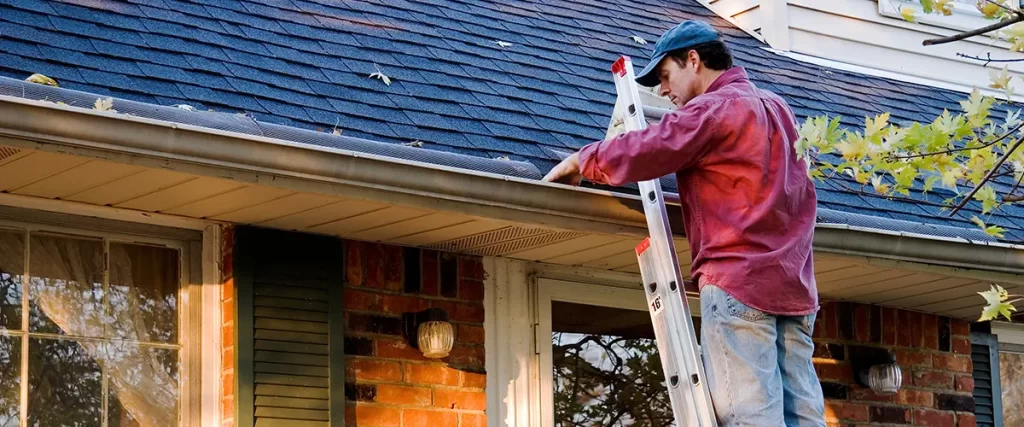
Find Your House in This Table
Skip the theory and locate your situation in the left column.
| Your situation | The right gutter size |
| Single-story home, gentle roof slope | 5 inch |
| Average two-story colonial, simple roofline | 5 inch |
| Large roof area draining to few downspouts | 6 inch |
| Steep pitches that shoot water fast | 6 inch |
| Complex roofs with multiple valleys | 6 inch |
| Gutters that overflow in heavy rains | 6 inch |
| Metal roof or smooth shingles | 6 inch |
| Half-round gutters on a classic home | Size up one |
That last row trips people up, so it’s worth a sentence. Half-round gutters hold less water than K-style at the same width, which means a home that would be fine with 5-inch K-style usually wants 6-inch half-rounds to match the capacity.
Why Bigger Wins More Often Than It Used To
Rainfall has changed, and gutters sized for the storms of thirty years ago are being asked to handle the storms of today. Here in New Jersey, the state’s environmental agency has documented a clear trend toward heavier downpours, and you’ve probably watched it happen from your own porch. When an inch of rain falls in twenty minutes instead of three hours, the question stops being how much water your roof sheds and becomes how fast it sheds it.
Roof pitch multiplies the problem. A steep roof acts like a slide, accelerating water so it leaps across the gutter instead of dropping into it, and roof valleys concentrate two planes of runoff into a single firehose aimed at one short stretch of gutter. Wider gutters give all that moving water somewhere to land.
If you want to see exactly what your roof is up against, the precipitation frequency data published by NOAA shows the rainfall intensities your specific town can expect, and it’s the same resource professionals use when they calculate drainage for a roof area.
A few situations where 6 inch gutters earn their keep fastest:
- Long runs, because water builds volume as it travels toward the downspout
- Fewer downspouts, since each one carries a bigger share of the roof
- Tree-heavy lots, where debris buildup steals capacity and wider channels clog slower
- Snow country rooflines, where meltwater and ice put extra load on every component
What 5 Inch Gutters Still Do Well
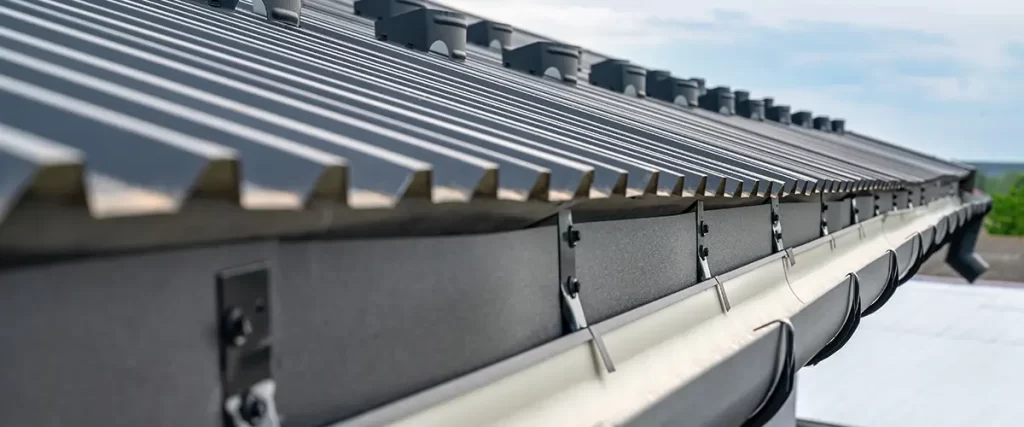
Plenty of homes have no business paying for the upgrade. A 5 inch gutter system on a properly pitched run, with downspouts placed correctly, protects a typical roof beautifully and has for decades. The material costs less per linear foot, the profile looks proportional on smaller fascia boards, and replacement parts are everywhere.
The honest cost difference between the two sizes is modest in the scope of a full installation, and that’s exactly why the decision should follow your roof instead of your wallet. Paying for capacity you’ll never use wastes a little money. Installing capacity you needed and skipped costs you siding repairs, foundation moisture, and washed-out landscaping later, because overflow always finds the most expensive path down.
One more variable matters as much as size, and that’s the installation itself. A 6 inch gutter hung with poor pitch underperforms a 5 inch gutter hung with proper pitch. Sizing sets the ceiling, and workmanship decides whether you ever reach it.
Speaking of water finding sneaky paths into a house, our breakdown of roof leaks hiding under solar panels shows how small water entry points become big repairs, and the lesson transfers directly to gutters.
If your existing system is sagging or leaking at the seams rather than just undersized, our gutter replacement service page walks through how we rebuild the whole run, fascia and all.
Questions Homeowners Ask About Gutter Size
Can I mix sizes on one house?
Yes, and it’s often the smartest configuration. Many homes run 5 inch gutters on most elevations and 6 inch where a valley or steep section dumps concentrated water.
Do 6 inch gutters need bigger downspouts?
They should get them. Pairing wider gutters with 3×4 inch downspouts is what actually unlocks the added capacity, since the outlet is where most systems bottleneck.
Will gutter guards change what size I need?
Guards reduce debris and cleaning, and they slightly slow water entry during intense bursts. On overflow-prone roofs, that’s one more argument for the wider channel underneath.
Or Hand the Tape Measure to Someone Who Climbs Roofs for a Living
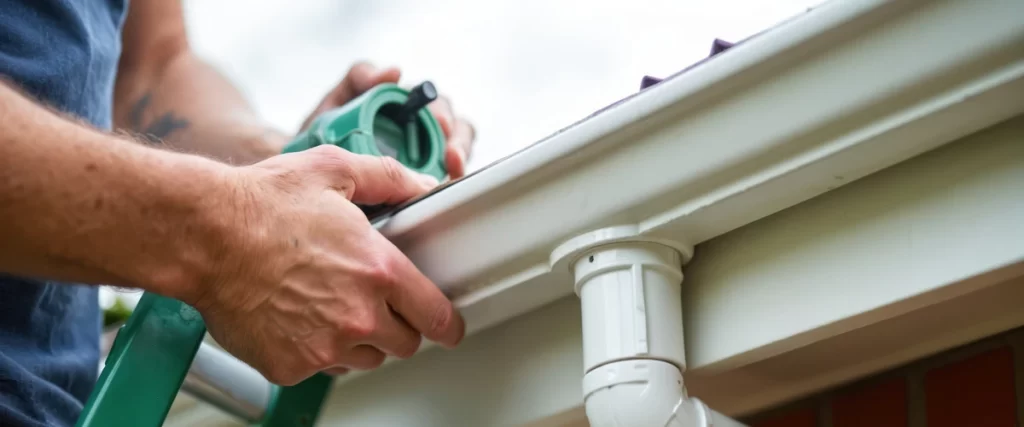
You could calculate your roof area, factor the pitch, count the valleys, and map your downspouts this weekend. Or one visit from our crew settles it, with the math done correctly and a quote in your hand. Braga Brothers has spent over 30 years protecting New Jersey homes, and sizing a gutter system takes us minutes, honestly.
Call us at (732) 888-3892 or message us here, and when you’re ready to see how a properly sized system goes in, our gutter installation services show the whole process before anyone touches a ladder.