
Most roofs in New Jersey hold up between 15 and 50 years. The exact number depends on what is sitting up there, how it was nailed down, and how much abuse the weather has thrown at it. Quick lay of the land:
- Standard asphalt shingle roof: 15 to 25 years
- Architectural shingles: 25 to 30 years
- Metal roofs: 40 to 70 years
- Wood roofs: 25 to 30 years with steady upkeep
- Flat roofs on commercial buildings: 10 to 25 years
- Slate, clay, or concrete tile: 50 to 100 plus years
So why does your neighbor’s roof give up at year 12 while another house on the block sails past year 28? Let’s get into it.
Roofing Materials and Real-World Numbers
Brochure numbers and real-world numbers are not always best friends. The table below shows what tends to actually happen.
| Material | Typical Lifespan | Notes |
| Three tab shingles | 15 to 20 years | The basic, budget option |
| Architectural shingles | 25 to 30 years | Most common upgrade today |
| Standing seam metal | 40 to 70 years | Galvanized steel leads the pack |
| Wood shake and shingle | 25 to 30 years | Needs the most love |
| Slate and clay tile | 75 to 100 plus years | Outlives the people who paid for it |
| Flat roof membranes | 15 to 30 years | Common on commercial buildings |
The shingle roof on most American homes is an asphalt shingle roof. Architectural shingles, sometimes called dimensional shingles, have largely replaced traditional three-tab shingles on new builds because they look better, handle high winds more gracefully, and add roughly a decade of service life.
What Quietly Kills a Roof Early
Three key factors shape your roof’s lifespan more than the brand stamped on the wrapper.
- Installation quality: Improperly nailed shingles loosen during storms, and poor flashing leaks within a few seasons. A new roof installed correctly buys you an extra decade.
- Poor ventilation: Trapped attic heat cooks shingles from underneath. The asphalt dries, granules fall off, and the shingle goes brittle well before its expected lifespan.
- Severe weather and high winds: After Hurricane Michael, FEMA recommends shingles rated to withstand 116 mph wind speeds. Anything weaker peels off during big nor’easters.
Layer in UV degradation, freeze-thaw cycles, moss in shady corners, and algae growth painting dark streaks down south-facing slopes. Each one chips away at service life. The U.S. Department of Energy notes that reflective cool roofs stay up to 60°F cooler than dark ones, easing the thermal load on the materials below.
Signs Your Roof Is Past Its Prime
You do not need a professional roof inspection to spot warning signs. A walk around the house will surface most of them.
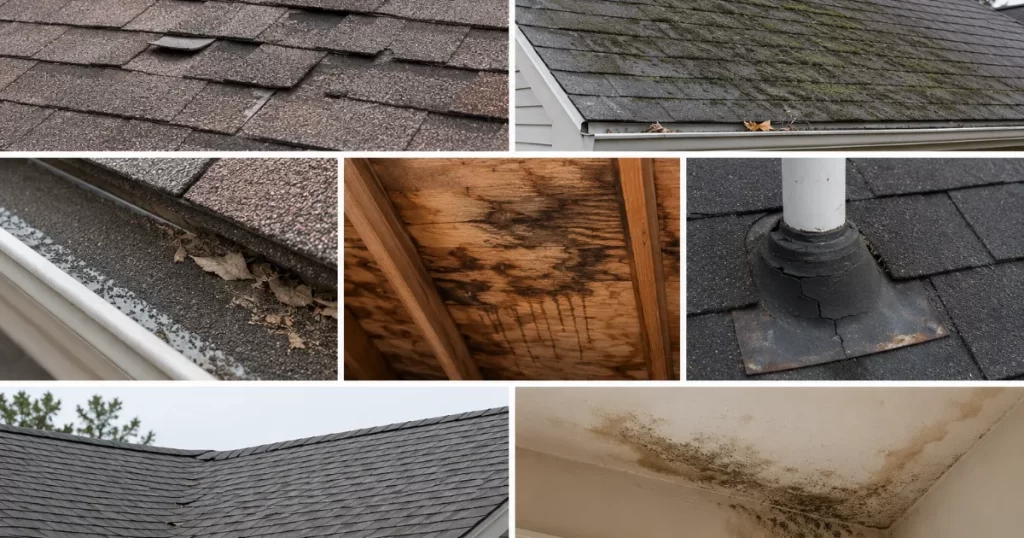
- Curled, lifted, or missing shingles after a windy week
- Dark streaks running down the slopes from algae
- Protective granules collecting at the base of your downspouts
- Visible signs of sagging along the ridge or between rafters
- Cracked pipe boots, rusted flashing, or pinhole leaks in the attic
- Mold growth or coffee-colored stains across an upstairs ceiling
Two or three of those? Worth a call to a roofing professional. Five or more, and your older roof needs a full replacement, not another patch job.
For a deeper look at how different shingles actually compare, our breakdown on what roof shingles are made of covers every option in plain language.
Stretching the Lifespan
Routine maintenance does not magically add ten years, but it stops small problems from snowballing into structural damage.
- Clear gutters twice a year, more often with trees overhead
- Trim trees so branches stop scraping shingles
- Replace cracked pipe boots and rusted flashing as soon as you spot them
- Schedule a professional roof inspection every 3 to 5 years, sooner after major storms
- Tackle moss growth and algae growth before they lift shingles or trap moisture against the wood decking
If a recent storm left lifted shingles or minor damage, a targeted fix beats waiting. Our storm damage roof repair team can buy you a few more years on a current roof.
When Repair Stops Making Sense
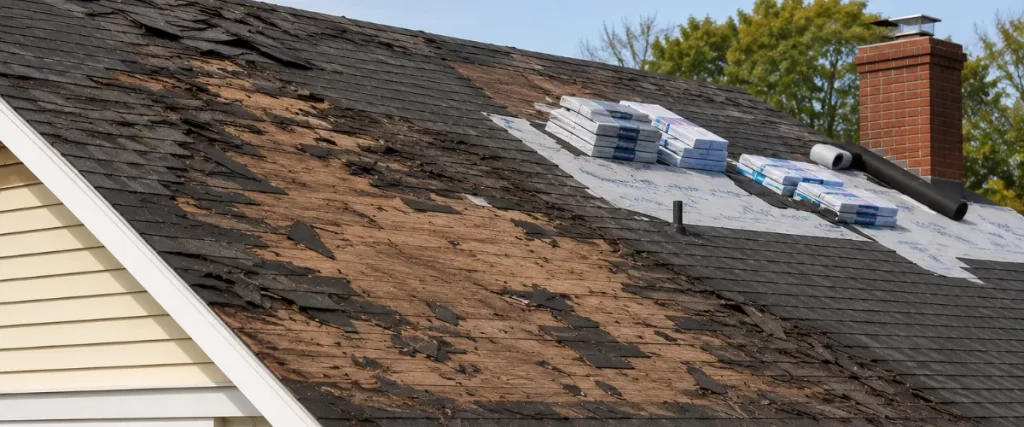
Roof repair works when damage is local and the system is still healthy. Once you pass about 75 percent of the typical lifespan and water has worked into the roof deck, the math flips. A full replacement resets the clock, includes fresh roofing system warranties, and lets you upgrade ventilation and energy efficiency in one swing.
A roofing contractor can inspect the system, explain whether repair still makes sense, and tell you when replacement is the better long-term move.
FAQ
Can I replace just the top layer of shingles? Sometimes. Stacking new over old hides the wood decking from inspection. We rarely recommend it on older homes.
Do metal roofs really last 70 years? A well-installed galvanized steel standing seam roof can hit that range, especially in dry climates with low salt exposure.
What is the average roof lifespan in New Jersey? For asphalt shingle roofs, expect 20 to 25 years. Coastal salt air, freeze-thaw winters, and humid summers tend to shave time off paper estimates.
How often should I book a professional roof inspection? Every 3 to 5 years, plus a quick check after any major storm.
Skip the Detective Work
Reading articles is helpful. Climbing ladders, mapping moss growth, and guessing at the age of your wood decking is less helpful, especially when you have a job, kids, and a hundred other things going on.
Let us handle it. Our team comes out, runs a full inspection, and tells you whether you need a quick fix, a handful of targeted repairs, or a fresh start. Call us at (732) 888-3892 or message us here, and we will sort the rest.
If you would rather skip ahead to what a fresh start actually looks like, materials, timeline, and pricing included, our roof installation page has the full picture.