
Yes, in most cases siding can be repaired, and homeowners replace far more of it than they need to. Cracks, holes, loose panels, dents, and faded patches all have established fixes, and the repair usually costs a fraction of new siding.
The honest answer depends on two things, what your siding is made of and how far the damage has spread, so the smartest way to answer the question for your own house is to grade your situation against both. That’s exactly what this breakdown does.
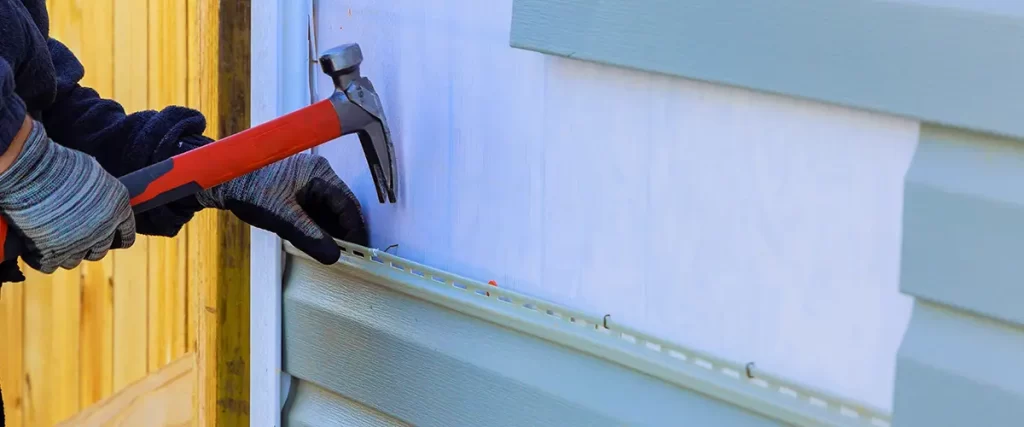
The Repair Report Card, by Material
Every siding material earns a different grade for repairability, and knowing yours changes the whole conversation.
| Material | Repair grade | What repair usually looks like |
| Vinyl siding | A | Swap individual panels with a zip tool, patch small holes |
| Aluminum | B+ | Fill dents, replace single panels, repaint to match |
| Fiber cement | B | Patch chips with cementitious filler, replace cracked boards |
| Wood | B- | Epoxy small rot spots, replace boards, scrape and paint |
| Engineered wood | C+ | Replace affected boards, since moisture swelling spreads |
Vinyl sits at the top of the class because the panels interlock, and a tool that costs less than lunch unhooks one damaged piece without disturbing its neighbors.
Wood lands lower on the card because its problems tend to travel, and a soft spot you can press a thumb into often continues behind the paint where you can’t see it.
The Size Rule That Decides Almost Everything
Here’s the measuring stick we use on real houses. Damage smaller than your palm gets repaired. Damage covering multiple panels across multiple walls gets a bigger conversation.
Between those two points, the decision follows the age and condition of everything around the damaged area.
A single crack from a stray baseball, a hole where a satellite mount used to live, or a corner clipped by the lawn mower all fall firmly in repair territory. The fix is contained, the materials are cheap, and the wall returns to full strength the same day.
The math shifts when damage shows up in a pattern. Hail is the classic example, because a storm strong enough to crack one panel rarely stops at one, and the hail safety information from the National Weather Service explains why even one-inch stones arrive with enough force to wound an entire elevation at once.
After a serious storm, walk all four sides of the house in good light, because hail damage hides in shadows and only announces itself months later when water finds the cracks.
Sun-faded vinyl creates the other common pattern problem. A brand-new panel installed into a twenty-year-old wall sticks out like a bright tooth, so on older homes we sometimes harvest a matching panel from a hidden spot, like behind the backyard shed line, and install the new piece where nobody looks.
Repairs Worth Doing the Day You Notice Them
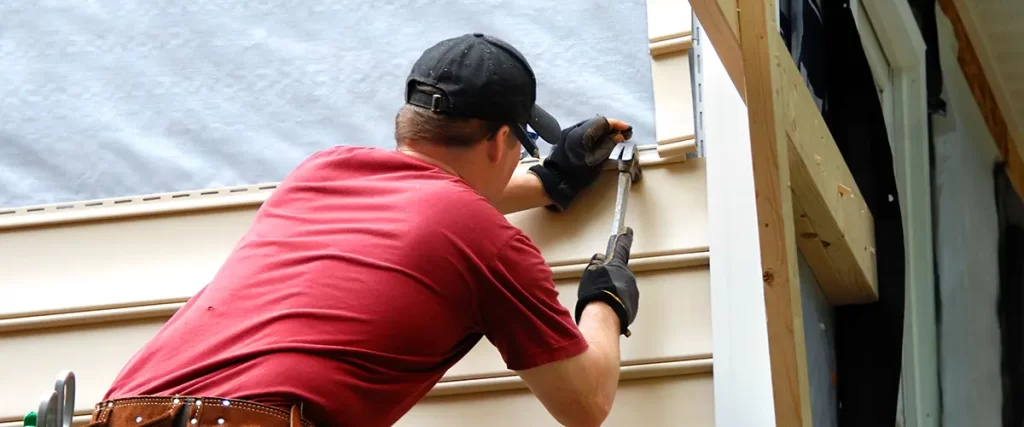
Some siding damage politely waits for you. The items below don’t, because each one is a door for water.
- Open cracks and punctures, since every rain pushes moisture behind the wall where insulation and sheathing soak it up
- Panels lifted by wind, because the next gust works the gap wider and can peel the whole course
- Gaps at seams and trim, where caulk has shrunk and pulled away
- Green or black streaks, which signal mildew feeding on trapped moisture, and a soft wash plus a fix for the moisture source stops it
- Woodpecker holes in wood siding, which insects treat as an engraved invitation
None of these repairs is glamorous. All of them protect the sheathing, framing, and insulation that cost far more than the siding covering them, and that’s the real job description of every wall on your house.
What You Can Fix Yourself, Honestly
A capable homeowner with a free Saturday can handle a surprising amount. Small holes in vinyl take a color-matched patch kit or exterior-grade caulk, and the result holds for years. Dents in aluminum fill and sand much like auto body work. A loose panel often clicks back into its locking strip in minutes once you know the trick.
Painting is where wood siding owners should slow down for a moment. Scraping and repainting is the classic refresh, and on homes built before 1978 the old layers may contain lead, which is why the EPA’s lead-safe renovation guidance calls for specific containment practices before anyone starts sanding. A quick test kit from the hardware store settles the question before you make dust.
The jobs that belong with a professional are the ones involving height, hidden water, or matching.
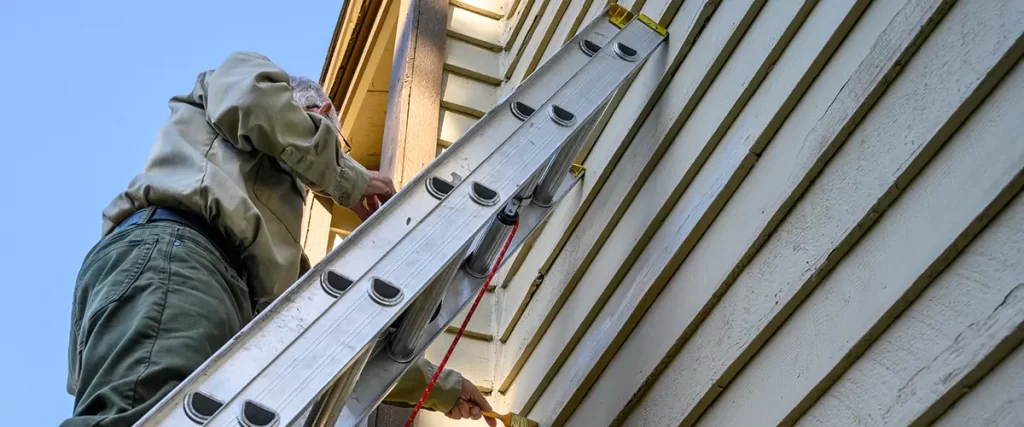
Second-story work changes the risk profile entirely, soft sheathing behind a damaged area means the repair is bigger than it looks, and color-matching faded siding is half art, half supplier connections.
A pro also spots the cause behind the damage, because a panel that keeps failing in the same spot usually has a gutter, flashing, or drainage problem feeding it. Water rarely confines its mischief to one material, and our post on roof leaks hiding beneath solar panels shows how far a small breach can travel before anyone notices.
The same detective logic applies behind siding, and since overflowing gutters soak more siding than hail ever will, it helps to understand how a correctly pitched gutter system keeps water off your walls in the first place.
When Replacement Genuinely Wins
Repair has limits, and pretending otherwise wastes your money in slower motion.
Replacement earns the nod when damage spans most of a wall or several walls, when the siding has reached the end of its service life and every fix buys months instead of years, when moisture has reached the sheathing in multiple areas, or when matching panels for your discontinued color no longer exist anywhere.
At that point, continuing to patch is paying twice, once for each repair and again for the replacement that’s coming anyway.
There’s also an upside hiding in that decision. New siding resets your home’s protection, refreshes the look of the whole property, and lets you upgrade to a material with a better report card grade than the one you’ve been nursing along.
Three Questions Homeowners Ask Us About Siding Repair
Can you repair just one section of vinyl siding?
Yes, individual panels unlock and replace cleanly. Color match is the only real challenge on older homes, and a good contractor has tricks for that.
Does homeowners insurance cover siding damage?
Sudden events like hail and windstorms are commonly covered, while gradual wear is excluded. Photograph the damage right away and get a written assessment before filing.
How long does a typical siding repair take?
Most single-area repairs wrap up within a few hours. Larger sections involving sheathing work can run a day or two.
Put the Ladder Back and Let Us Take It From Here
Everything above, the grading, the measuring, the matching, the lead test, condenses into one visit from people who repair siding every week. Braga Brothers has cared for New Jersey homes for over 30 years, and we’ll tell you plainly which panels need help, which ones are fine, and what it costs, with photos to back every word.
Call us at (732) 888-3892 or message us here, and if you’d like to see how we bring a damaged wall back to full strength, our siding repair services walk through the whole process.