
Aluminum K-style seamless gutters are what most residential homes end up with, and that’s usually the right call.
But there are four main gutter styles, six common gutter materials, and sizing decisions that shape whether the whole system works the way it should.
Wrong combination, and you’re dealing with overflow in heavy rain, water pooling near the foundation, and a drainage system that fails exactly when it matters most.
Gutter Styles: K-Style, Half-Round, Box, and Fascia
K-Style
The popular one, and it’s not close. The flat back sits flush against the fascia board, the front curves like crown molding, and that profile just moves more water per linear foot than a rounded trough the same width. Efficient, easy to find, and it looks right on most modern homes.
Half-Round
The curved, old-school trough, the kind your grandmother’s house probably wore. There are no sharp interior corners for debris to pile up in, so it stays cleaner with less effort than K-style.
It carries a little less water at the same width and wants its own mounting hardware. But put it on a Colonial or a Victorian, and the half-round gutter shape earns every extra dollar on looks alone.
Box Gutters
A different animal. They’re built into the roof structure instead of hung off the edge, they sit flush with the roofline, and they swallow serious volumes of water. You’ll spot box-style gutters on commercial buildings and big older homes. The catch is that when one fails, the damage hides inside the framing, and you usually don’t find out until it’s already spread.
Fascia Gutters
These take the place of the fascia board entirely, so the gutter itself becomes the finished edge of the roof. Clean, modern, and not something to tackle yourself.
Gutter Materials Compared
| Material | Lifespan | Rust Resistant | Notes |
| Aluminum | 20-30 years | Yes | Most common, lightweight, low maintenance |
| Copper | 50+ years | Yes | Premium cost, develops patina, very durable |
| Galvanized Steel | 20-25 years | No (over time) | Strong, rusts at seams without upkeep |
| Stainless Steel | 30-50 years | Yes | Best for coastal exposure and salty air |
| Zinc | 40-80 years | Yes | Rare in the US, exceptional longevity |
| Vinyl | 10-15 years | Yes | Budget option, cracks in cold, warps in heat |
Aluminum is the dominant gutter material in the US because it doesn’t rust, installs easily, and seamless aluminum can be fabricated on-site to fit any roofline exactly.
Copper gutters are genuinely beautiful and will outlast most of what’s around them on the house, but the price per linear foot reflects that.
Galvanized steel gutters handle heavy rainfall well, but will rust at seams over time without consistent maintenance.
For coastal homes where salty air is a daily factor, aluminum and stainless steel hold up best.
Vinyl works in mild climates on tighter budgets, but it gets brittle in cold and warps in sustained heat. New Jersey winters will find its limits quickly.
Clogged gutters affect roofs faster than most homeowners expect. Our blog on the most common roofing problems covers exactly how backed-up drainage deteriorates the fascia board and roofline from below.
Seamless vs. Sectional: A Real Difference in Performance

Sectional gutters come in pre-cut lengths joined on-site. The seams are where leaks start, and debris catches.
They’re cheaper upfront and workable as a DIY installation on a simple run, but you’ll be maintaining those joints for the life of the system.
Seamless gutters are cut from a continuous aluminum coil on-site to the exact length each run requires.
No joints along the span means no built-in failure points. Seamless aluminum gutters require professional installation because the fabrication equipment is specialized, but the reduction in leaks and long-term maintenance is real and meaningful.
And here’s something worth knowing: the EPA’s NPDES Stormwater Program identifies residential rooftop runoff as a growing contributor to local water quality issues, which is one reason a properly functioning home drainage system carries more weight than it’s usually given credit for.
Sizing and Gutter Guards
Most homes use 5-inch gutters. Steeper roofs, larger roof surface areas, and high-rainfall areas should move to 6-inch gutters to handle greater water volume without overflowing during a storm.
The right size is calculated from roof pitch and the square footage draining into each run.
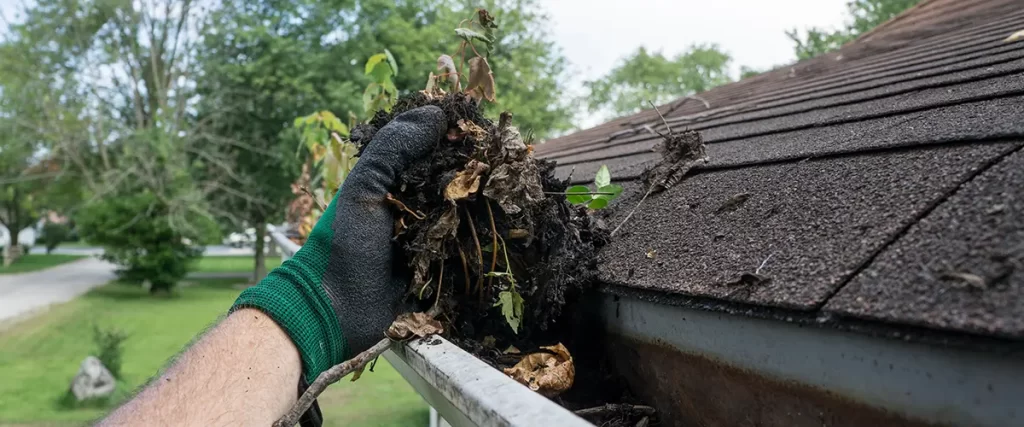
Gutter guards are worth adding during installation if significant tree coverage is nearby. They reduce debris buildup, keep downspouts clear, and cut down on how often the system needs cleaning.
EPA green infrastructure guidance specifically identifies gutters and downspouts as the first-line system for moving rooftop water away from foundations and into the community drainage network, which gives proper sizing more consequence than most homeowners realize until something goes wrong.
If drainage problems have gone unaddressed long enough that your roofline might already be affected, our blog on the warning signs your roof may need replacing is worth a read.
FAQ
What is the most durable gutter material?
Copper and zinc lead the field for longevity, with copper lasting 50 or more years in most climates. For most homeowners, seamless aluminum is the practical answer: durable, rust resistant, and priced for the lifespan it delivers.
Are seamless gutters worth the extra cost?
Yes. The seam is where sectional gutters fail, and seamless systems remove that vulnerability entirely along the run. Over a 20 to 30 year lifespan, the maintenance difference is real.
Do gutters actually protect the foundation?
More than most people give them credit for. Repeated overflow saturates the soil around your home’s foundation, leading to erosion, basement moisture, and eventually structural problems. A correctly installed drainage system is one of the more straightforward protections for the base of the house.
What size gutter do most homes need?
5-inch for most residential homes. Move to 6-inch if your roof is steep, the surface area is large, or you’re in an area with heavy rainfall.
Honestly, You’ve Got Better Things to Do Than Calculate Roof Pitch
All of this is genuinely useful to know. But applying it correctly, right style, right material, right size, right pitch, with properly placed downspouts and a system that actually fits your specific roofline, that’s the part that trips most homeowners up.
So if you’d rather just have it done right the first time, call us at (732) 888-3892 or message us here, and we’ll look at your roofline and tell you straight what your gutter installation needs.