
Metal roofs last 40 to 70 years, shrug off heavy snow, hail, and high winds, and slash energy bills in summer. They also cost two to three times more upfront than an asphalt shingle roof, can dent under a falling branch, and need a qualified contractor to install correctly. That tension is the whole conversation. Worth the money for some homes, overkill for others.
Here is what to actually weigh.
Why People Love Metal Roofs
Most homeowners who switch to metal never want to go back. The reasons hold up under scrutiny.
- Long life spans: 40 to 70 years, two to three times longer than asphalt shingles
- Energy efficiency: Light-colored metal reflects sunlight. The EPA notes that cool roofs reduce peak cooling demand by 11 to 27 percent in residential buildings
- Class A fire rating: Metal panels are noncombustible, a real advantage in areas prone to wildfire
- Sheds snow and rain quickly: Slick surface means less ice damming
- Withstands extreme weather: Many systems hold up to 120 mph winds and large hail
- Curb appeal: Modern paint finishes mean galvanized steel, aluminum, copper, and tin roof options across many architectural styles
Fewer replacements, lower energy bills, and less stress over time are what tips the scale for forever-home owners.
Why People Don’t
Metal roofs come with real tradeoffs. Pretending otherwise sells nobody a good roof.
- Higher initial cost: Metal runs $9 to $20 per square foot installed, versus $4 to $7 for asphalt shingles
- Specialized labor: Trained crews are required for standing seam systems with concealed fasteners
- Oil canning: Wavy distortions show up on flat panels, mostly cosmetic
- Dents from impact: Falling branches and large hail can leave permanent dents in softer metals like aluminum
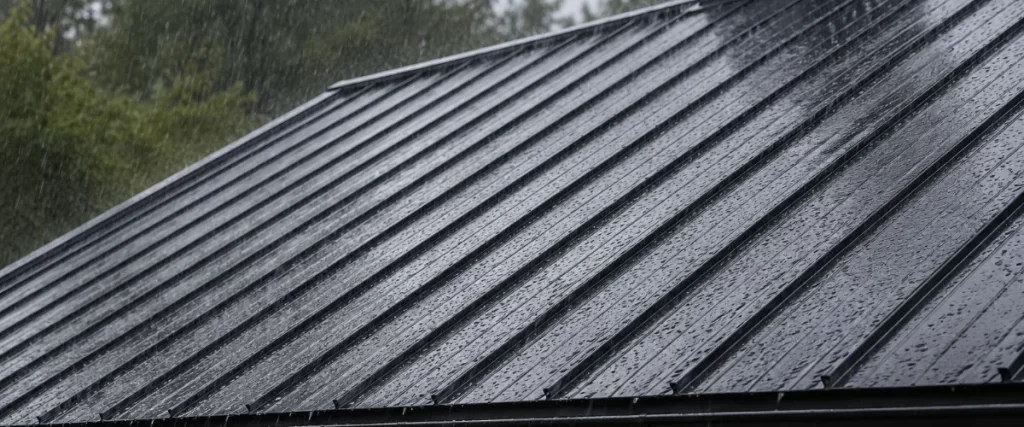
- Noise during heavy rain: A real issue on a barn, mostly a non-issue with proper attic insulation
- Improper installation gets expensive fast: Bad fasteners, flashing, and panel expansion are why metal roofs leak
The cons of metal roofs almost always tie back to the same root cause: the wrong installer. Get that right, and most of these problems disappear. For roof repair work outside metal-specific issues, our roof repair page covers what we handle.
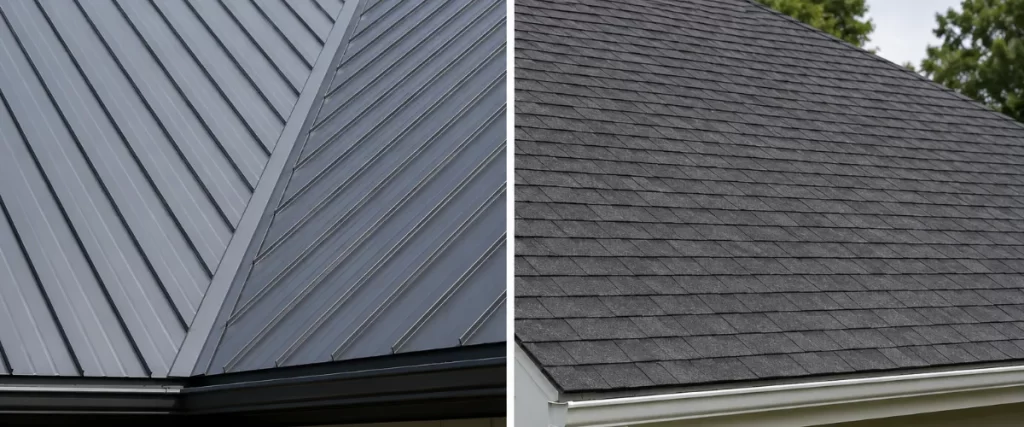
Metal vs. Asphalt at a Glance
The comparison usually comes down to upfront cost versus lifetime value. Here is the picture in one frame.
| Feature | Metal Roof | Asphalt Shingle Roof |
| Typical lifespan | 40 to 70 years | 15 to 30 years |
| Upfront cost per square foot | $9 to $20 | $4 to $7 |
| Energy efficiency | High, reflective surface | Lower, especially dark shingles |
| Wind resistance | Up to 120 mph | 60 to 130 mph depending on grade |
| Maintenance | Periodic inspections, low overall | Regular check-ups, more frequent repairs |
| Curb appeal | Modern, sleek, customizable | Familiar, traditional |
If you want a deeper look at how shingles stack up against other roofing materials, our breakdown on what roof shingles are made of covers each option.
The Big Myths That Refuse to Die
Three claims keep circulating, and all three are wrong.
First myth: metal roofs attract lightning. They do not. Lightning hits the tallest, most isolated points, regardless of roofing material. If lightning does strike, metal is actually safer because it does not ignite like wood or asphalt.
Second: metal roofs leak more than asphalt. They do not when installed correctly. Most metal roof leaks trace back to bad fasteners, missing sealant at penetrations, or a batten system installed wrong. A roofing company that knows its craft prevents leaks for the life of the roof.
Third: metal roofs are brutal in extreme heat. Modern paint finishes, especially on light-colored panels, reflect heat rather than absorb it. The U.S. Department of Energy notes that reflective cool roofs lower the cooling load on a home. Many homeowners report cooler attics after replacing dark asphalt with reflective metal.
Is a Metal Roof Worth It For Your House?
Picture how long you plan to stay. More than 12 years, and the math leans toward metal because you skip a full asphalt replacement cycle. Five years or less, and a quality asphalt shingle roof gives better return per dollar.
Climate also matters. Areas prone to wildfire, heavy snow, or severe weather get more out of metal’s durability. Mild climates get less of that bonus.
Existing structure plays a role too. A few homes need extra reinforcement, though it is rare since metal panels weigh less per square foot than slate or clay tiles.
A roofing contractor can compare metal and asphalt options against your budget, home structure, and how long you plan to stay.
FAQ
Are metal roofs really louder in the rain? Only on uninsulated structures. A home with a proper attic and insulation sounds about the same as a shingle roof during heavy rain.
Do they work on every architectural style? Pretty much. Standing seam suits modern homes, and metal shingles can mimic wood shake, slate, or clay tiles for traditional designs.
What happens if a panel gets damaged? A qualified contractor can swap individual panels without redoing the whole roof. Concealed fasteners on standing seam systems make this cleaner than older exposed-fastener systems.
How often do metal roofs need maintenance? Periodic inspections every two to three years, plus a check after major storms.
Skip the Spreadsheet, Talk to Us
Comparing per-square-foot prices, panel types, fastener systems, and warranty fine print is a Saturday well spent if you enjoy that. Most people do not. Our crew has installed both metal roofs and asphalt shingle roofs across New Jersey, and we will tell you straight which one fits your house, climate, and budget.
Ready to upgrade to a metal roof? Our team installs durable, energy-efficient metal roofing built for long-term protection and curb appeal. Call us at (732) 888-3892 or message us here to schedule a walkthrough.